





The warnings have been around for at least 10 years, growing in intensity in Europe and the USA, and given their most impactful voice yet in the 2015 'Madrid Statement' — a document published in the journal Environmental Health Perspectives and signed by over 200 scientists from 38 countries.
The Huffington Post summarised the health risks associated with PFASs: the Madrid Statement cites data linking PFAS exposures with certain cancers, delayed puberty, decreased fertility, reduced immune response in children and elevated cholesterol, among other health problems. A Danish study further linked blood levels of PFASs with up to a sixteenfold increase in the risk of miscarriage.
After a long list of concerns with PFASs, the Madrid Statement recommended:
"Whenever possible, avoid products containing, or manufactured using, PFASs. These include many products that are stain-resistant, waterproof, or nonstick. Question the use of such fluorinated 'performance' chemicals added to consumer products."
American cooks have been rapidly switching back to seasoned cast iron for its healthy nonstick properties, and rising sales of cast iron in Australia indicate the start of the same health trend. After living in the USA for 7 years and France for 5 years, Australian engineer Mark Henry (founder of Furi knives) believed he could improve on traditional American cast iron and French steel pans, and manufacture them competitively in Australia. In late 2014, his company Solidteknics launched their Australian-made AUSfonte cast iron cookware, and in late 2015 their AUS-ION seamless wrought iron pans, to broad acclaim among chefs and experts.
For Health and Sustainability — What Are Your Cookware Options?
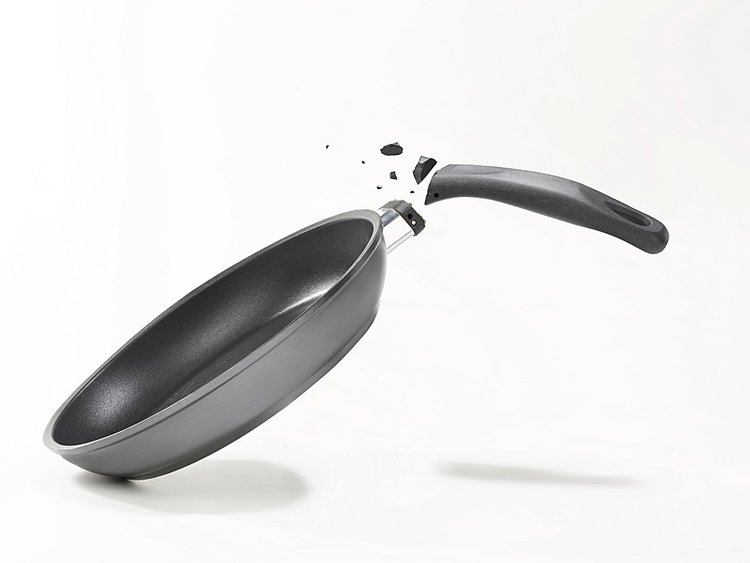
- Synthetic-coated nonstick pans should simply never be considered. Toxic (in production and cooking), non-recyclable, and disposable with a very short lifespan.
- Ceramic-coatings or titanium reinforced nonstick may not be as toxic, but they are disposable with a very short effective life.
- Enamel-coated cast iron from reputable manufacturers is entirely inert and safe. Particularly good for slow cooking of acidic, sauce-based foods, though can be very sticky for frying after surface wear.
- Solid glass and ceramic/stoneware from the best manufacturers can be excellent inert vessels for slow cooking in the oven, though very inefficient at heat transfer and susceptible to thermal shock.
- Bare cast iron is one of the best for a combination of healthy and sustainable low-stick cooking. Can last for centuries, and the natural seasoning you build yourself lasts just as long with a little care.
- Bare steel and wrought iron cooks and seasons like cast iron, with all the same health benefits, but at around half the weight. Australian-made AUS-ION pans are formed from one seamless sheet of wrought iron, far more durable and hygienic than traditional riveted pans.
- Regular stainless steel (clad with aluminium layers) can be good for boiling/simmering and acidic sauces, though quite sticky for frying. Be aware of nickel leaching in nickel-based stainless steels (almost all of them, like 18/8 or 18/10).
- Exceptional solid seamless 1-piece wrought ferritic (non-Nickel) stainless steel: Patented by Australian engineers and made in Sydney and Chicago, Solidteknics' nöni cookware is non-toxic, more highly conductive than regular stainless/aluminium clad/ply, and is wrought in one solid piece for multi-generation durability.

